

Work is doing the teaching. Are we stopping to learn?
Most of what we learn at work, we learn by doing the work. In Growth Faculty’s Future of Learning Report 2026, 71% of the 146 leaders surveyed said real work is their biggest source of learning. (We spoke with Growth Faculty’s Barbara Harvey on Shapeshifters.)
But work moves fast. The same report describes how busyness crowds out the space to learn. Unless we build in time to stop and make sense of what’s happening, some of our most important lessons slip straight past us.
Growth Faculty’s answer is what they call a Ritual of Learning: a regular, deliberate pause to take in new ideas, reflect on what’s happened and bring it back into the work. We love this idea because the best rituals don’t add another program to anyone’s calendar. They sit inside the rhythms teams already have.
What makes it a ritual, not just another meeting
The report draws on Lorissa Garcia and Lotty Roberts, creators of The Workplace Rituals Deck, to make a useful distinction. As Garcia puts it: “A routine is something we repeat because it needs to get done. A ritual carries greater meaning. It creates rhythm and signals that something is important enough for us to make time for.”
The learning rituals that stick tend to share a few things:
- They have a set trigger. They happen at the end of a sprint, after a launch or every Monday, so nobody has to remember to schedule them.
- They’re short. Most take less than 45 minutes, and some take five.
- They ask the same few questions each time. People know what to expect and come prepared.
- They’re social. We make sense of experience best by talking it through with others.
- They change something. Each one ends with something the team will keep doing, start or try.
10 learning rituals to try
A few of these come from the report’s own examples. The rest are ones we use or have seen work.
1. Retrospectives

When: at the end of each sprint, cycle or project phase. Time: 30–45 minutes.
We run these at Makeshapes at the end of every cycle. The trick is to leave with one thing to change, then check on it at the next retro.
- What went well?
- What got in the way?
- What’s one thing we’ll do differently next cycle?
2. Failing forward

When: weekly or monthly, inside an existing team meeting. Time: 10–15 minutes.
One person shares a mistake and what it taught them. It works best when leaders go first.
- What happened?
- What did it teach you?
- What would you do differently next time?
3. Learning moments

When: the first few minutes of a regular meeting. Time: 3–5 minutes.
Borrowed from the safety moment that opens meetings in many industries. Instead of a safety lesson, someone shares a learning one.
- What’s one thing you’ve learned recently?
- What prompted it?
- What should the rest of us take from it?
4. Project pre-mortem

When: before a project kicks off. Time: 30–45 minutes.
Imagine it’s six months from now and the project has failed. Working backwards surfaces the risks people might not raise otherwise.
- Why did it fail?
- Which of those reasons can we act on now?
- What will we watch for along the way?
5. Project post-mortem

When: after a project, launch or incident. Time: 45–60 minutes.
Keep it blameless. The goal is to understand what happened, not to find someone at fault.
- What did we set out to do?
- What actually happened, and why the gap?
- What will we keep, and what will we change?
6. Customer call debriefs

When: straight after an important customer conversation. Time: 10 minutes.
The insights fade fast, so capture them while they’re fresh.
- What did we hear?
- What surprised us?
- What will we do with it?
7. Work hack show-and-tell

When: in a weekly standup or team meeting. Time: 5 minutes.
We share work hacks in our standups at Makeshapes. A shortcut, tool or AI prompt that saves one person time can soon save the whole team’s.
- What’s a hack that saved you time this week?
- How could the rest of us use it?
8. “What I learned this week”

When: every Friday, in person or in a team channel. Time: 10 minutes.
A light way to end the week that makes learning visible across the team.
- One thing I learned this week
- Where I learned it
- How I’ll use it next week
9. Shared read, watch or listen

When: monthly. Time: 30–45 minutes.
Everyone takes in the same article, video or podcast episode, then the team discusses what it means for them. As the report puts it, the experience can be collective while the meaning stays personal.
- What resonated?
- What would this look like here?
- What’s one thing we’ll try?
10. Leader peer circles

When: monthly. Time: 45–60 minutes.
A small group of leaders each brings a live challenge and compares how they’re approaching it.
- What’s the challenge, and what have you tried?
- What have others done in a similar spot?
- What will you try before we next meet?
How to get started
You don’t need all ten. Start with one.
- Pick a ritual that fits a rhythm your team already has, like a standup, a sprint or a monthly meeting.
- Run it at least three times before you judge it. Rituals take a few rounds to feel natural.
- Keep the questions the same each time so people know what to expect.
- After a month, ask the team whether to keep it, tweak it or swap it for another.
The report makes a point that stuck with us: “Work without a rhythm to make sense of it rarely turns into growth.” A few minutes of deliberate reflection, done consistently, can turn everyday work into lasting capability.
Related resources
All resources →
Our top ten tools for the future of learning, 2026
Our ballot for Jane Hart's 20th Top Tools for Learning survey—and what it says about where the real scarcity in learning now sits.
Read more →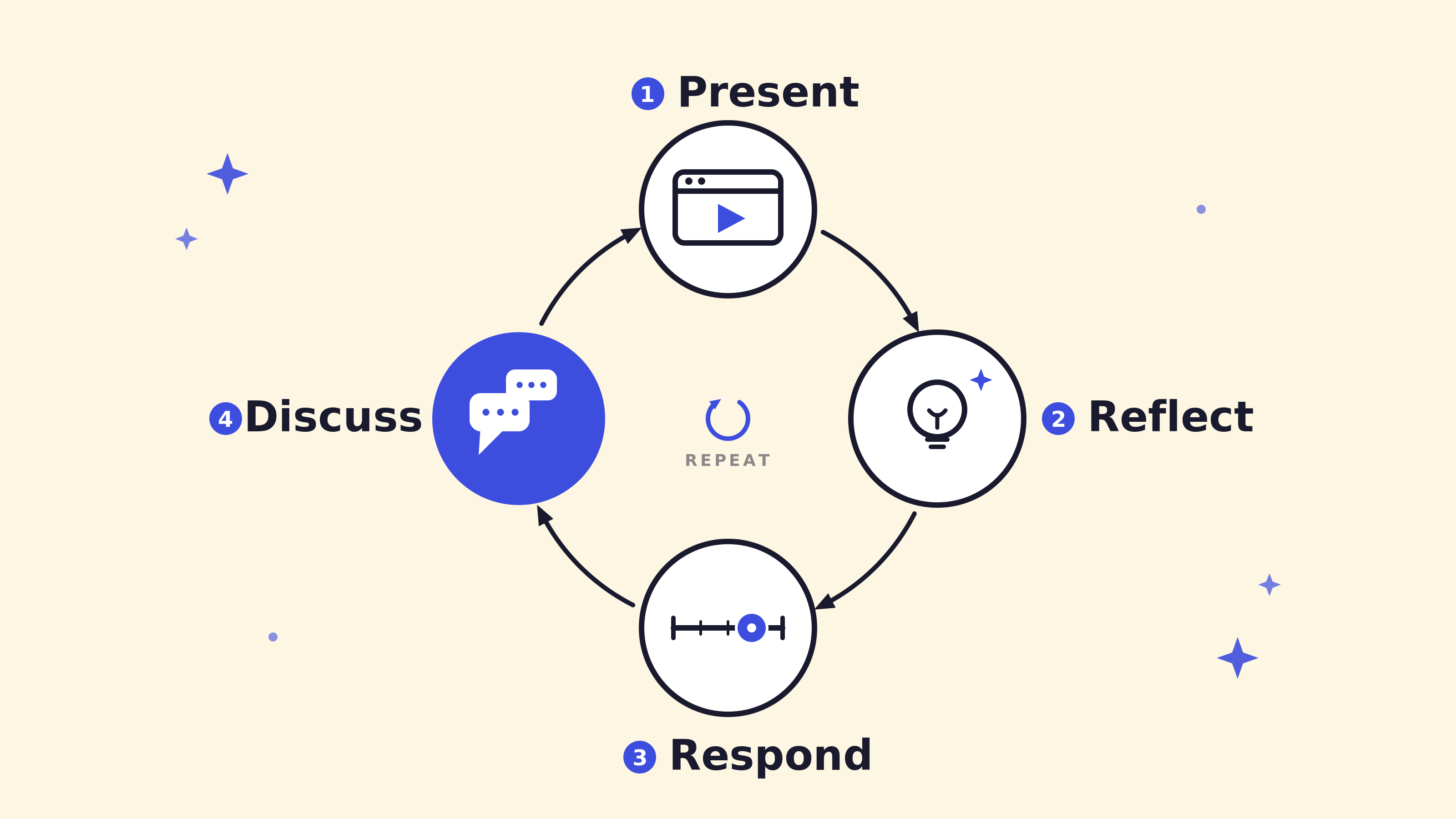
Designing for discussion: Why dialogue is the destination
A guide to designing learning around a simple rhythm that sparks richer conversations.
Read more →
Designing for psychological safety in group learning
Cultivate safe learning environments that foster deeper understanding and transformation.
Read more →
 Enterprise customization
 Flexible pricing
 Support while you scale
 Account management